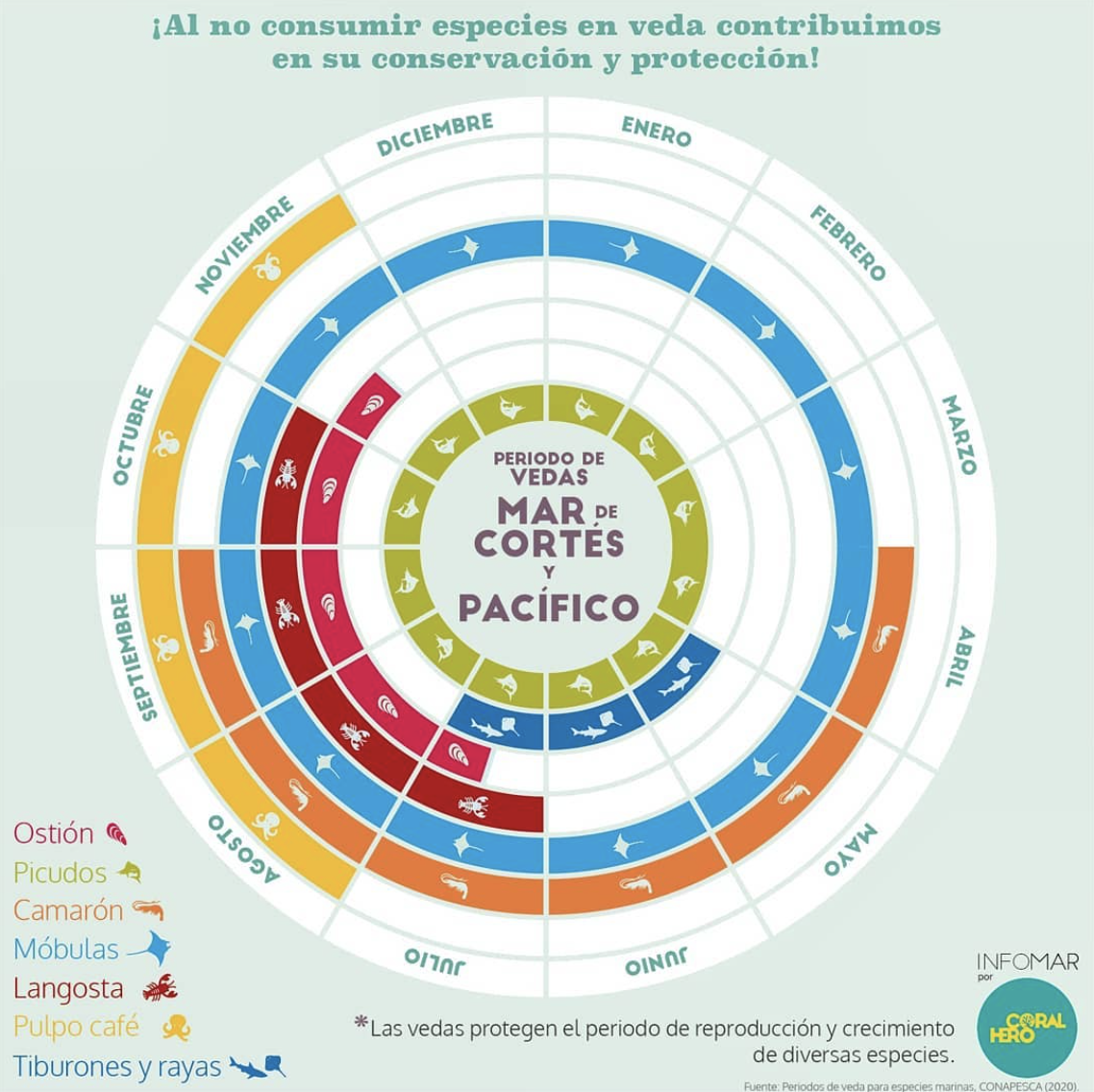
May 1st marked the beginning of the veda or fishing ban on shark and rays in the waters of Baja California Sur. It is common throughout the year to hear the word thrown around at restaurants or seen on government communications, so we thought we’d go deeper and tell you about this practice, what it is, what it means and most importantly: do they work?
What are vedas?
A veda is defined as an official administrative act through which fishing is prohibited for a specific period of time or in a specific area, established through official norms or agreements, in order to safeguard reproduction and regeneration of a species.
Vedas are very important to assuring the sustainable harvesting and fishing of a variety of species in our ocean.
When do vedas occur?
In Mexico, there is three types of fishing bans: permanent, fixed temporary, and variable temporary.
Permanent bans prohibit the fishing of species year-round, some of the species protected under this type are whales, bottlenose dolphin, manatees, sea cows, and turtles.

Fixed temporary bans temporarily prohibit fishing for species that are cultivated in the country and the dates of these are repeated annually, such as octopus, red sea urchin, abalone and shrimp. Depending on the region the dates of the vedas vary.

Variable temporary bans unlike fixed bans, the dates for variable temporary bans are changed and updated annually.
Because these acts are run by the local or national governments, they vary throughout the year depending on the region. Here are some examples of vedas in Mexico:
Feb 15-Sep. 15: Lobster in Baja California
March 1 - June 31: Red sea urchin in Baja California
May 1 - July 30 : Sharks & Rays in Baja California
May 1 - June 30: Sharks & Rays in Gulf of Mexico